



Ariad
Helping investigators search through large volumes of video data while keeping control firmly in human hands
Specialised Product Design
Interface Design
Collaboration with Europol Innovation Lab
DETAILS
Specialised Product Design @ Umeå Institute of Design
TEAM
Kacper Skup-Prochownik, Leon Burg
MY ROLE
Research, Concept, Ideation, UX Design, Interface Design
TIMELINE
8 weeks - 2025

Challenge
Every day, law enforcement investigators face an overwhelming volume of video data and the pressure to move through it quickly. Sorting relevant footage from irrelevant, identifying critical moments before they're missed, and building a picture of events that could mean the difference between an arrest and a cold case.
Artificial intelligence offers meaningful potential here, but its adoption into law enforcement comes with a distinct responsibility: to support the investigator's judgement, and not replace it.
Project Brief
Design a user interface that helps law enforcement investigators efficiently, adaptively, and responsibly process large amounts of videos to find critical information.
Field Research & Approach
To design for investigators, we first had to understand their role as professionals with deeply embedded workflows, instincts, and responsibilities.
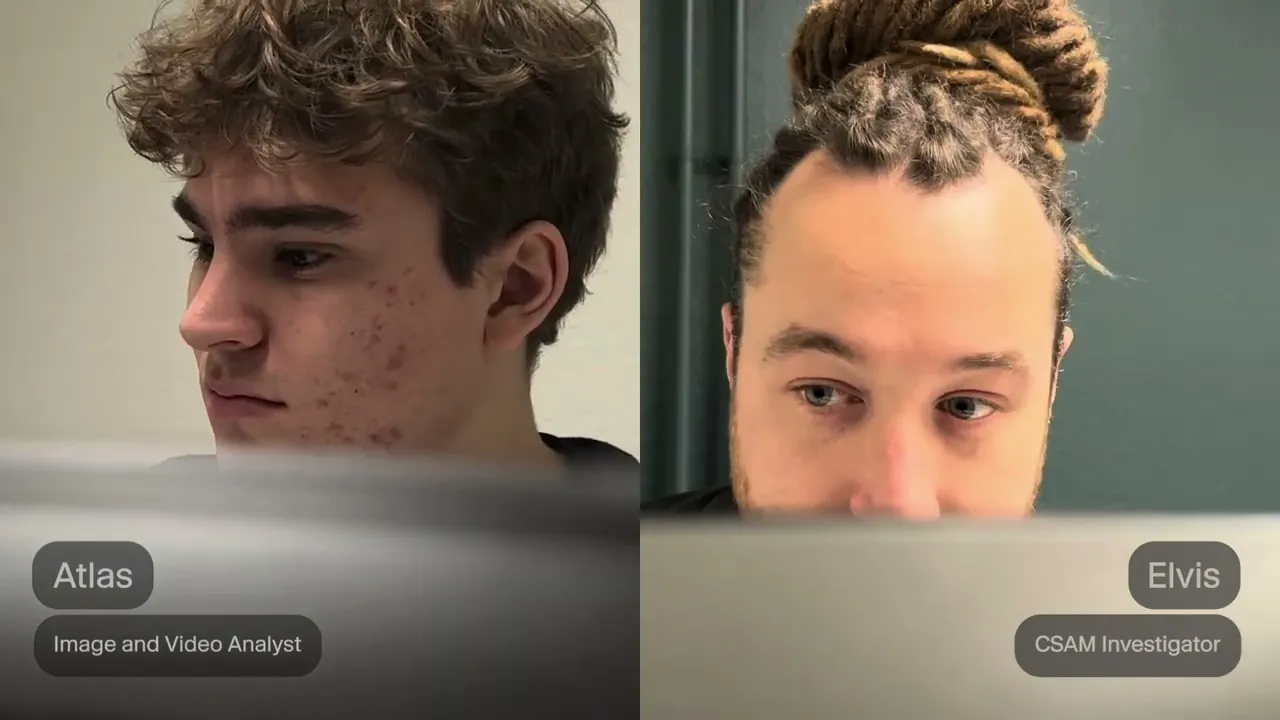
We conducted 10 ethnographic interviews with law enforcement investigators across Umeå and Stockholm, using active interviewing methods to let participants shape the research as much as respond to it.
To communicate the nuanced realities that emerged, we used role-playing and storytelling at both research and concept presentation stages.
The goal throughout was to earn the right to design for this context by genuinely inhabiting it's stakes first.


Core Insights
How might we support multiple workflows while preserving the “magic” of law enforcement practices?
Concept & Design Principles

Efficient
A tool that fits seamlessly into an investigator's existing toolkit and operational mental models.

Adaptive
A tool that supports distinct workflows adopted by investigators rather than flattening it into a straightforward method.

Responsible
A tool that recognises the investigator's accountability towards a case, and the system's accountability to the investigator.
A Responsible Interface
Ariad is a system that uses computer vision technology to support tasks such as scanning, sorting, and reviewing large volumes of video data, while keeping control over search and interpretation firmly in the hands of the investigator.
Ariad enables both highly precise querying and more intuitive exploration while allowing experts to work in ways that align with their existing responsibilities and cognitive styles.
Node-Based Prompting
The node-based UI makes the logic of a search visible. Rather than a single text input, each prompt is broken into discrete, connected steps in order to give investigators explicit control over what the system is looking for.
This method supports precise search, quick and iterative refinement, and explainability of the system.
Text-Based Prompting
A natural language entry point for open ended exploration. Investigators describe what they're looking for in their own words and the system handles the abstraction. This search is accessible for novice users, and useful for any search that resists precise categorisation.
Search Results
The system architecture supports flexibility through modular controls for sorting, filtering, threshold setting, and tagging. This allows users to interrogate results from multiple perspectives that best fit the case at the time, refine queries iteratively, and maintain transparency over how system outputs are generated.
Video Player
The video player supports focused analysis of a single file, presenting both the footage and its contextual metadata in one environment. EXIF metadata and file paths are displayed alongside footage as this information holds evidentiary value in court. Investigators can annotate, capture, and export directly from this view.
Reflection
Working on this project in collaboration with Europol Innovation Lab was a unique experience. It gave me the opportunity to think beyond interfaces and pushed me to understand an expert user's mindset and work context more deeply than any past project of mine.
It also revealed the challenges a designer faces when creating AI for a complex, high stakes domain like law enforcement. Most importantly, it inspired me to design with deliberation and intention, bringing me closer to my goal of cultivating healthier relationships between people and technology.
I explore my reflections on designing AI for law enforcement in greater depth in an academic article I wrote during my sense-making module.


